
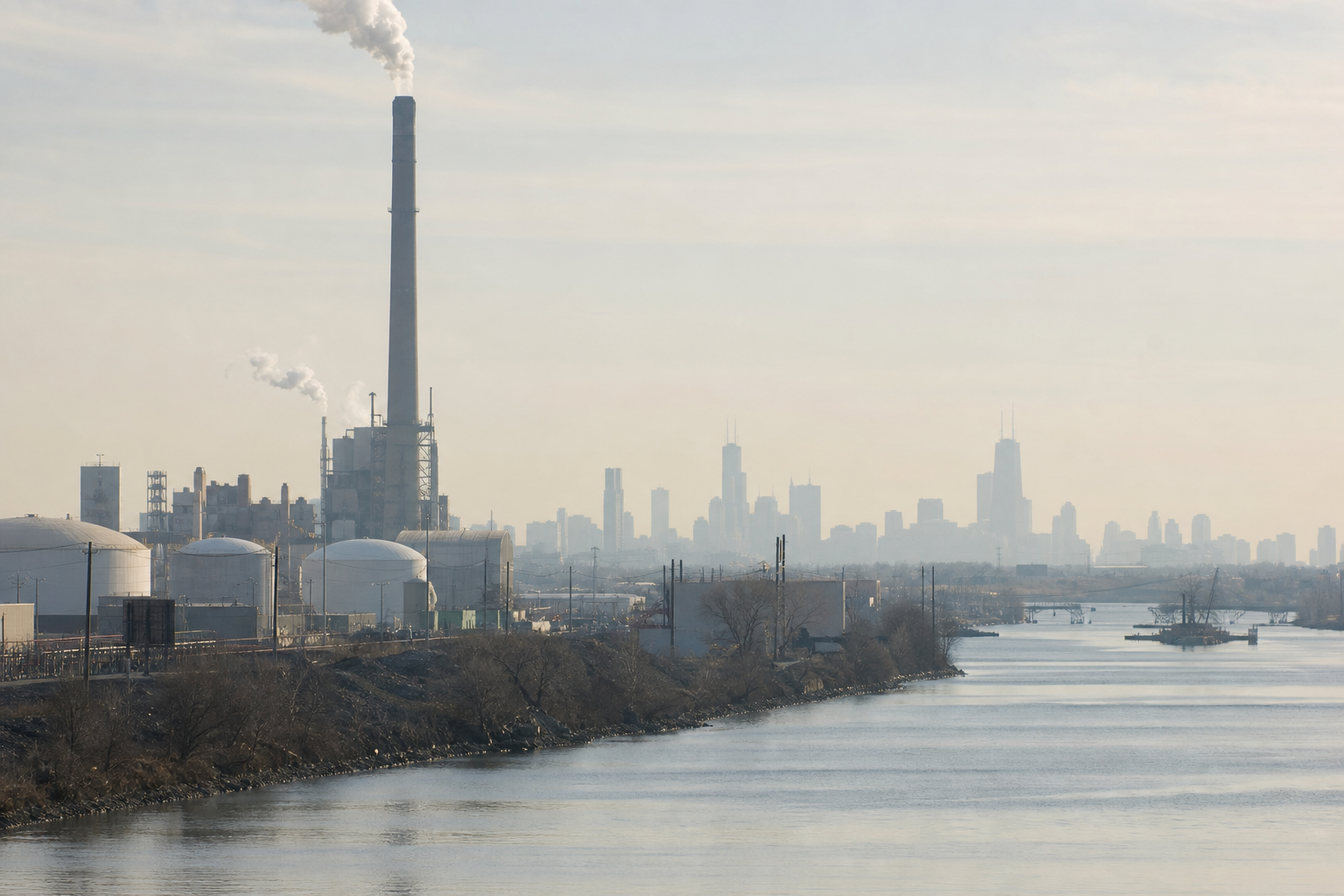

Does Chicago’s environmental permit file show that the city brought back its Department of Environment? Its description does: the department, it says, was “fully restored” on May 1, 2026. Its rows do not. All 591 permits issued from May 1 through September 14 list the Department of Public Health in the file’s data-source column, which the file’s notes define as “The city department that collected the data.” Those 591 are the most issued in that stretch of the year since 2021 — and about a third of the 1,778 issued in the same stretch of 2010.
DOE Environmental Permits (ir7v-8mc8), 67,617 permits issued from 1990 through September 14, 2026, retrieved September 15, 2026 and read whole for permit type, status, dates, id and data-source label · applicant names, site names, addresses, coordinates and comments were not pulled · eras follow the file’s own description · a label is what the file says, not proof of who issued a permit · no permit holder is named or judgedTwo departments, one permit file
The file describes its own history. The Department of Environment issued permits until January 1, 2012, when it was “disbanded” and its permitting moved to the Department of Public Health; on May 1, 2026 it was restored. The same break shows up across the city’s other environmental records: this site found the complaints, inspections and enforcement files each split at January 1, 2012. Sorted into the description’s three eras by issue date, the permits and their data-source labels look like this:
| Era, by issue date | Permits | Labeled Historic Dept. of Environment | Labeled Dept. of Public Health |
|---|---|---|---|
| Before January 1, 2012 | 41,754 | 40,431 | 1,323 |
| January 1, 2012 – April 30, 2026 | 25,204 | 1 | 25,203 |
| May 1 – September 14, 2026 | 591 | 0 | 591 |
Does the file show the restoration? Not in its labels
Every permit issued since May 1 carries the Public Health label. Their type labels read “DOE” — 575 of the 591 are filed as DOE Air Quality — but that name is not new: the Public Health era filed 21,388 permits under DOE Air Quality, and type labels beginning “DOE” first appear on a permit dated December 1, 1999. The permit ids say the same. The file’s note says Public Health permits are prefixed “ENV_,” yet none of the 67,617 ids begins that way; the 591 since May 1 begin ENVAIR (575), ASTINS (13), ENVTRC (2) and ENVREC (1), stems the Public Health era already used. Nothing in these rows’ labels or ids marks the change.
Are more permits being issued? More than in that stretch of the last four years
| Year | Permits issued May 1 – Sept. 14 |
|---|---|
| 2010 | 1,778 |
| 2011 | 1,203 |
| 2012 | 1,411 |
| 2013 | 946 |
| 2014 | 705 |
| 2015 | 598 |
| 2016 | 775 |
| 2017 | 766 |
| 2018 | 811 |
| 2019 | 773 |
| 2020 | 617 |
| 2021 | 738 |
| 2022 | 512 |
| 2023 | 504 |
| 2024 | 483 |
| 2025 | 539 |
| 2026 | 591 |
The 591 permits issued between May 1 and September 14 are more than that window held in any year from 2022 through 2025 — 2025 held 539 — and fewer than 2021’s 738. They are also about a third of 2010’s 1,778. Whether the restoration had anything to do with this year’s count, the file cannot say; it records when permits were issued, not why.
The long arc: from 4,048 permits a year to about 1,100
| Year | Permits issued |
|---|---|
| 2010 | 3,507 |
| 2011 | 2,524 |
| 2012 | 4,048 |
| 2013 | 2,106 |
| 2014 | 2,428 |
| 2015 | 1,580 |
| 2016 | 1,976 |
| 2017 | 1,789 |
| 2018 | 1,868 |
| 2019 | 1,806 |
| 2020 | 1,437 |
| 2021 | 1,344 |
| 2022 | 1,057 |
| 2023 | 1,047 |
| 2024 | 1,132 |
| 2025 | 1,213 |
| 2026 (through Sept. 14) | 964 |
The file’s busiest year is 2012, with 4,048 permits — the year its description says permitting moved to Public Health. From 2022 through 2025 the count ran between 1,047 and 1,213 a year, and 2026 had reached 964 by September 14. Why the counts fell is not in the file.
What gets permitted
By label, air quality, in every era. Before 2012, 29,747 of the 41,754 permits were filed as air pollution control permits, 71.2%, with 9,453 underground storage tank permits next. From 2012 through April 2026, DOE Air Quality accounts for 21,388 of 25,204, 84.9%. Since May 1 it is 575 of 591, 97.3%, with 13 aboveground storage tank installations, 2 temporary rock crushers and 1 recycling facility making up the rest.
Where the labels and the description part ways
The data-source column does not follow the description’s eras exactly. 1,323 permits dated before 2012 carry the Public Health label, the earliest dated December 1, 1999, and one permit dated 2012 or later carries the historic Department of Environment label, whose last use is dated April 9, 2012. The status column keeps capital and mixed-case twins — 40,939 “CLOSED” and 20,316 “Closed,” 5,957 “Open” and 356 “OPEN,” 28 “Stop Work” and 20 “STOP WORK” — plus one “Deleted,” and the file’s note says a closed permit has expired. Another 68 permits carry no issue date.
What the file confirms, and what it cannot tell you
Confirmed, as filed: each permit’s type, subtype, status, issue and expiration dates, id and data-source label. What no column read here holds: which department actually issued a permit, beyond the label the notes describe; whether the restoration changed rules, staff or pace; why yearly counts fell; and anything about permit holders or sites, which this page did not read. No permit holder is named or judged.
Where the record lives
The permits file sits on the city’s data portal beside the complaints, inspections and enforcement files. Every figure here recomputes from the file as retrieved September 15, 2026; later permits, or a relabeling, would change them.
The bottom line
Asked whether the city’s permit file shows the Department of Environment’s return, the answer depends on which part of the file is read: its description says the department was fully restored May 1, 2026, while every one of the 591 permits issued since lists Public Health as the collecting department, under type labels and id stems the Public Health era already used. The count for May 1 through September 14 is the highest since 2021, and yearly permits from 2022 through 2025 stayed under a third of the 2012 peak.
Two more questions the file can answer
How many permits read open? 6,313, in either spelling, and 48 read stop work. And which label covers more of the file’s history? The historic Department of Environment label does, with 40,500 permits against 27,117 labeled Public Health.
- Source: the city’s DOE Environmental Permits file (ir7v-8mc8), 67,617 rows, retrieved September 15, 2026 and read whole.
- Columns read: permit id, type, subtype, status, issue and expiration dates, and data source. Application names, applicants, addresses, coordinates and comments were not pulled.
- Eras (the file’s): before January 1, 2012; January 1, 2012 through April 30, 2026; May 1, 2026 on, sorted by issue date.
- Our arithmetic: era counts, shares, the matched May 1–September 14 window, and folded status counts.
- Not here: no permit holder or site named, no judgment of any permit, and no cause offered for any trend.
Computed by KCM Desk from the city’s environmental permits file, retrieved September 15, 2026. Human-guided and edited — about this desk. If you spot an error, corrections come first.
Related Keep Chicagoland Moving coverage
- How Chicago Works, by the Numbers
- Chicago’s Environmental Complaints, Inspections and Enforcement Files Each Split at January 1, 2012 — and the Older Half of the Complaints and Inspections Files Records No Outcomes at All
- Chicago’s Demolition and Asbestos Paperwork, Mapped: 1,253 Notices With Proposed 2026 Starts, Heaviest on the Near North Side, in Lake View, and in the Loop
- Chicago Measures Its Own Air Now: 286 Sensors, 2,544,089 Hourly Readings — and 96 Percent of Its 100-Plus PM2.5 Hours Landed on Two July Dates