KCM Desk

KCM Desk

The KCM Desk is the research and editorial operation behind Keep Chicagoland Moving, a publication of TAK Marketing, LLC. It's a desk, not a person: coverage is produced through intensive Chicago-focused research across public data, agency documents, and local reporting, then reviewed and edited before it publishes. How we work, in detail: keepchicagolandmoving.com/methodology/

11 of Chicago’s Most Haunted Places: The Stories as They’re Told — and What the Record Shows at Each of Them

Parked Chicago taxis on a side street beneath elevated train tracks on an overcast day

The city records every taxi-medallion transfer it processes: 5,729 closings since 2007. The median recorded sale was $357,000 in 2013 and $6,000 in 2026 - a 98.3 percent collapse, with transfers nearly stopping (21 in 2015) before prices gave way. One medallion fell from $380,000 to $12,000; the file's most frequent seller is the city's own BACP. Prices from positive-price sales; 166 $0 transfers counted apart.

11 of Chicago’s Most Haunted Places: The Stories as They’re Told — and What the Record Shows at Each of Them

Wrought-iron cemetery gates at dusk with mist, old monuments and a hazy Chicago skyline beyond

The eleven places where Chicago's ghost stories are told, each set against the record: the Iroquois fire's 602 dead per the city library, the Eastland's 844 per the historical society, the Park District's own page on the tomb in Lincoln Park, Jane Addams's firsthand 1916 account of the Devil Baby, five city-landmark buildings - and no ghost in any record this page reviewed. Every quoted sentence checked against its source page.

The Ten Chicago Community Areas With the Most City-Listed Affordable Rental Units: Grand Boulevard Leads With 2,406 of 29,550 — and Humboldt Park Has the Most Developments, 48

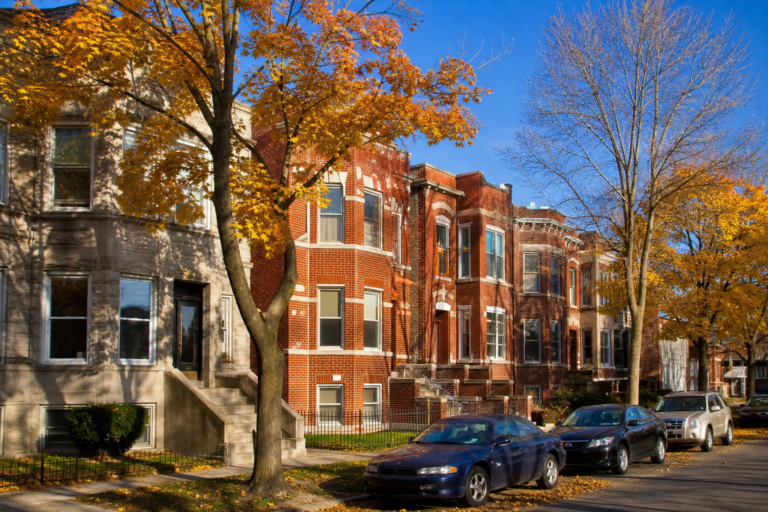
A Chicago boulevard with a grassy median lined by brick apartment buildings and greystones

Grand Boulevard holds 2,406 of the 29,550 units on the city's Affordable Rental Housing Developments list - 8.1 percent - and Humboldt Park has the most developments, 48. The ten community areas with the most city-listed units, with development counts beside them, from the city's list as updated December 30, 2024; listed units, not availability; eleven areas carry none.

Chicago’s Pensions, as the Documents State Them: $14.2 Billion Held Against $50.6 Billion of Pension Liability at the End of 2025, 28 Percent Funded — and No Fund Projected to Pass 50 Percent Before 2043 on the Schedule State Law Sets

LaSalle Street in downtown Chicago looking south toward the Board of Trade on an overcast day

By the city's own 2025 financial report, Chicago's four pension funds held $14.20 billion against $50.63 billion of pension liability at the end of 2025 - 28.1 percent funded, up from 25.4. The funds' own actuaries project none passing 50 percent before 2043 on the statutory schedule, which they call back-loaded; the same day's press release states 28.15 percent on a different liability basis. Every figure from the city's report, the funds' valuations, the state's biennial report and the Council's analysts, page-checked.

Chicago’s Environmental Complaints, Inspections and Enforcement Files Each Split at January 1, 2012 — and the Older Half of the Complaints and Inspections Files Records No Outcomes at All

Chicago industrial block with a scrapyard fence and smokestack, a city sedan parked at the curb

The city's three environmental files - 65,402 complaint rows, 282,616 inspection rows, 37,927 enforcement rows - each split at January 1, 2012 between the Department of Environment's system and the Department of Public Health's. The older half of the complaints and inspections files records no outcome on any row; the newer half records one on every row but leaves half its complaints undated; inspection dates run from 1753 to 4202; and the enforcement fine column repeats and goes negative, so no dollar total appears.

Chicago’s New Air-Sensor Network, Its First 391 Days: 102,907 Sensor-Days, a Median Day Near 9 Micrograms — and Two July 2026 Days When the Network-Wide PM2.5 Mean Hit 133 and 168

Air-quality sensor on a Chicago light pole with the skyline dimmed by smoke haze

Open Air Chicago's 277 non-regulatory sensors, read from the program's daily file: 102,907 sensor-days from July 26, 2025 through August 20, 2026, a median day at 9.02 micrograms of PM2.5 per cubic meter, half of sensor-days Good and most of the rest Moderate by the file's own AQI column - and July 16 and 17, 2026, when the network-wide mean hit 133 and 168 inside a stretch the state EPA and the city flagged for wildfire smoke. Provider-calibrated values, UTC days, no compliance finding.

12 Numbers for Anyone Moving to Chicago, From Public Agencies’ Own Records

Moving truck on a Chicago block of greystones and two-flats with an L viaduct at the end of the street

Twelve numbers for anyone weighing a move to Chicago, each from a public agency's own file and a published KCM analysis: the 81 percent valuation-to-sale ratio, 60 percent of self-filed appeals winning, an October 1 tax due date, 311's clocks, 69,852 basement-flooding requests, 2.76 million potholes filled, 3,852 house-share registrations, 86/65 percent transit recovery, $4.21-a-mile rideshares, a $1,750 federal rent figure, and 5 percent of beach tests at advisory level.

Chicago Reversed Its River in 1900. MWRD’s Own Log Shows It Has Released Water Back Into Lake Michigan 36 Times From 1985 Through 2025 — 52.5 Billion Gallons, the Last in July 2023, None in 2024 or 2025

Lock gates and controlling works where the Chicago River meets Lake Michigan under a stormy sky

Chicago reversed its river in 1900 - and MWRD's own posted log shows the district has released waterway water back into Lake Michigan 36 times from 1985 through 2025: 52.5 billion gallons, 41 percent of it in the September 2008 and April 2013 storms, the last in July 2023, none in 2024 or 2025 - with the district's own definition of a 'reversal' and its note that TARP reduced them.

Chicago’s Deep Tunnel, by MWRD’s Own Records: 1.55 Trillion Gallons Pumped Back in 28 Logged Years, $3.86 Billion in Contract Dollars — and the Last Reservoir Stage Has Slipped From 2029 to 2032

Terraced limestone walls of a reservoir quarry under excavation beside a canal near Chicago

The Deep Tunnel from the Metropolitan Water Reclamation District's own records: 1.55 trillion gallons pumped back out of TARP to the Stickney and Calumet plants in the 28 years the district's daily logs carry in full, 2018 the record year; $3.856 billion in contract dollars; 110.4 miles and 15.15 billion gallons of reservoirs - and a last reservoir stage the district's own documents moved from 2029 to 2032, with an 18-month hole in the posted logs stated, not filled.

Moving HereLiving HereCity in MotionNeighborhoods & Suburbs
About · Editorial Policy · Our Data & Methods · Privacy · Terms · Contact
© 2026 Keep Chicagoland Moving · A TAK Marketing, LLC publication · Part of the fabulous Omnishun information systems