KCM Desk

KCM Desk

The KCM Desk is the research and editorial operation behind Keep Chicagoland Moving, a publication of TAK Marketing, LLC. It's a desk, not a person: coverage is produced through intensive Chicago-focused research across public data, agency documents, and local reporting, then reviewed and edited before it publishes. How we work, in detail: keepchicagolandmoving.com/methodology/

Chicago Has 1,937 Legislated Parking Zones. The Median One Is Two Block-Sides Long — and 1,382 Segments Hold Zone Rights With No Signs for Their Zone

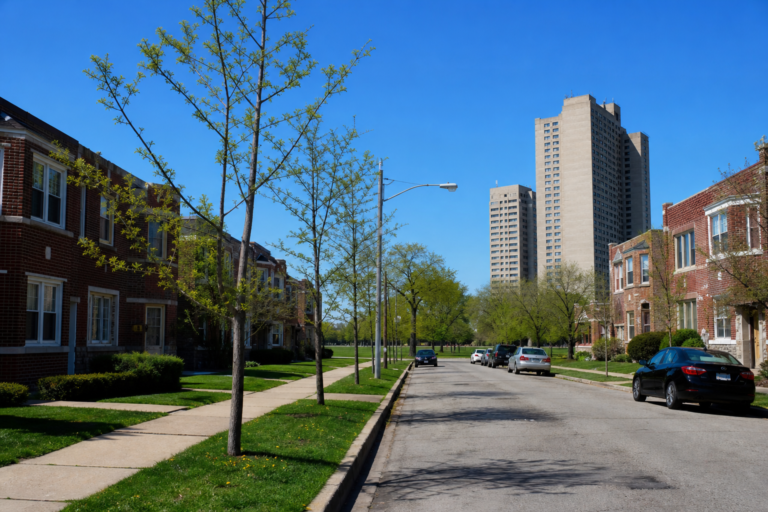
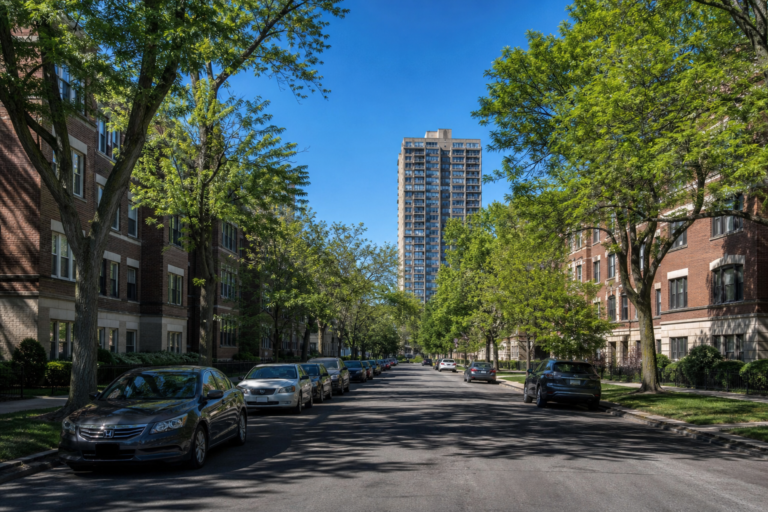
A Chicago side street lined with parked cars and a parking sign pole

Why does your block need a permit while the next street over doesn't? Chicago's residential permit parking is assembled from 1,937 active zones created by City Council legislation - and the file runs small: the median zone is two block-sides, 238 zones are a single segment, zone 383 sprawls to 653. One in seven active segments is an unsigned buffer where permit rights exist without that zone's signs, 17 percent of zone-street pairs cover one side only, and 503 segments sit rescinded. Prices and rules live with the City Clerk.

Chicago’s Small Business Improvement Fund Has Paid $158 Million Across 2,260 Projects (Median Project Share: 60 Percent) — and Its Jobs Columns Say Aspirational

A small Chicago brick storefront mid-renovation with scaffolding

The Small Business Improvement Fund fixes up commercial and industrial buildings with TIF money. Its completed-project file, read whole: $158,290,850 in grants against $311,428,135 in project costs since 2001 - 50.8 percent summed, a 60.1 percent median project share - across 2,260 projects in 70 community areas and 121 TIF districts; median grant $55,331; busiest year 2012, biggest dollar year 2025. The file's own jobs columns are labeled aspirational, and this page keeps that word. No applicant or project name is printed.

The Register Behind the Weird Lines on Your Chicago Receipt: 41,940 Tax Registrations, 35 Labels — and Two Labels With One Registrant Each

A long paper receipt curling on a counter beside a cash register

Who collects the Checkout Bag Tax line, the Bottled Water Tax, the amusement tax on a streaming bill? The Department of Finance's register holds 41,940 registrations across 35 tax-type labels: Ground Transportation leads at 10,299, the amusement family runs five distinct labels including one for social media, 6,947 registrations list out-of-state addresses, and two labels carry exactly one registrant. No name from the file is printed - its entity types include individuals - and no rate appears; the city's tax list is linked for current terms.

Chicago Keeps a Do-Not-Dig List: 14,093 Active Street Moratoriums, Doubled Permit Fees After Repaving — and One Stretch Protected Until 2207

A freshly repaved Chicago residential street with new yellow lines

When Chicago repaves or rebuilds a street, CDOT logs it on a moratorium list: 36,508 street-segment rows since 1998, 14,093 active - with doubled permit fees for the moratorium's life, ten years after reconstruction and five after repaving, in the portal's own words. Inside: 993 streets on the active list, a 2023 record year, exactly three rows labeled No Digging, a Madison Street row with no expiration, and a Churchill Street moratorium running to the year 2207, printed as filed.

Between Proposal and Ordinance, Chicago’s 2026 Position Book Moved by 51 — and 46 of the 51 Went to the Library

A grand public library reading room with green lamps and arched windows

The city publishes its 2026 position book twice - the mayor's proposal and the adopted ordinance. Read line by line, the whole difference fits one table: 27,975 annual positions adopted vs 27,924 proposed, the annual changes across eight departments summing to exactly +51 - 46 of them at the Chicago Public Library, which also gained 52,497 budgeted hours. Police unchanged at 13,727; the salary ladder unmoved; dollars up $8,622,575, or 0.22 percent.

Chicago Deep Dish, by the Record: Born Fall 1943, With a Creator the Reference Work Never Names — and 2,445 Active Licenses With PIZZ in the Name

A deep dish pizza in a steel pan with a slice being lifted

Seven things about Chicago deep dish, each traced to a named source: a fall 1943 birth per the Encyclopedia of Chicago, an origin Uno's page credits to Ike Sewell while the reference work names three partners and no inventor, a 600-degree recipe, pizza in Chicago since the 1890s, a first Lou Malnati's that opened in Lincolnwood on St. Patrick's Day 1971, a Gino's East opened by two taxi drivers and a partner - and 2,445 active licenses with PIZZ in the name, counted by us. No pizza is ranked; no restaurant is recommended.

Chicago Ran a Speedometer Made of Buses for Eight Years: 3 a.m. Is 7.5 mph Faster Than 4 p.m., and the Loop at 5 p.m. Averages 13.9

Slow rush-hour traffic with a bus on a wide Chicago arterial street at dusk

For eight years the city estimated arterial traffic speeds by analyzing GPS traces from CTA buses. The retired archive, read whole - 10,776,684 region-interval rows, 2018-2026: 3 a.m. averages 30.85 mph and the 4-5 p.m. hours tie at 23.33; the Loop is the slowest of 29 regions at 19.38 and Riverdale-Hegewisch the fastest at 33.41; the Loop at 5 p.m. averages 13.9. Every figure is an average of the tracker's estimates, not a driver's speed.

The CTA’s Own Daily Ledger: 11.06 Billion Boardings Since 2001, a Two-Million-Ride Day in 2008 — and a Recovery the Bus Is Carrying

A CTA elevated train curving above a street as a bus passes below

The CTA's one-row-per-day boarding ledger, read whole: 11,061,239,838 boardings across 2001-2025, a 2,049,519-ride day on July 3, 2008, a 110,047-ride Sunday in May 2020, a 2012 peak year and a 2021 trough - and a recovery the bus is carrying, with the bus share of boardings up from 52.1 percent in 2019 to 59.9 percent so far in 2026. Boardings are rides, not people; the CTA is a separate agency; dates are printed without events attributed.

7 Things Under Chicago, by the Record: Raised Streets, a Freight-Tunnel Flood — and Tunnels 300 Feet Down

An old underground freight tunnel with rail tracks receding into darkness

Seven things under Chicago, each traced to a named record: streets raised four to five feet on average in the 1850s, buildings lifted one owner at a time, a forgotten freight-tunnel network that flooded the Loop with 250 million gallons of river water in 1992, a Pedway linking more than 40 blocks, a separate government's 110 miles of tunnels up to 300 feet down, and the 811 file that logs what diggers hit. Every quote verified against its source; every figure of ours labeled.

Chicago’s Rideshare Roster: 86,195 Driver Records in June 2026, Little More Than Half Its 2017 Peak — and a Third of Them Recorded Zero Trips

Parked sedans on a wet Chicago street at night

The companies must report their eligible drivers to the city monthly, and the register runs 12,014,008 driver-month rows since 2015. June 2026: 86,195 driver records - 6.5 per active chauffeur license, and little more than half the March 2017 peak of 154,619. A third recorded zero trips, 29.5 percent drive for more than one company, 57.9 percent started within a year, 40.9 percent list Chicago addresses, and every row reads Independent Contractor. The file has no name column.

Moving HereLiving HereCity in MotionNeighborhoods & Suburbs
About · Editorial Policy · Our Data & Methods · Privacy · Terms · Contact
© 2026 Keep Chicagoland Moving · A TAK Marketing, LLC publication · Part of the fabulous Omnishun information systems