
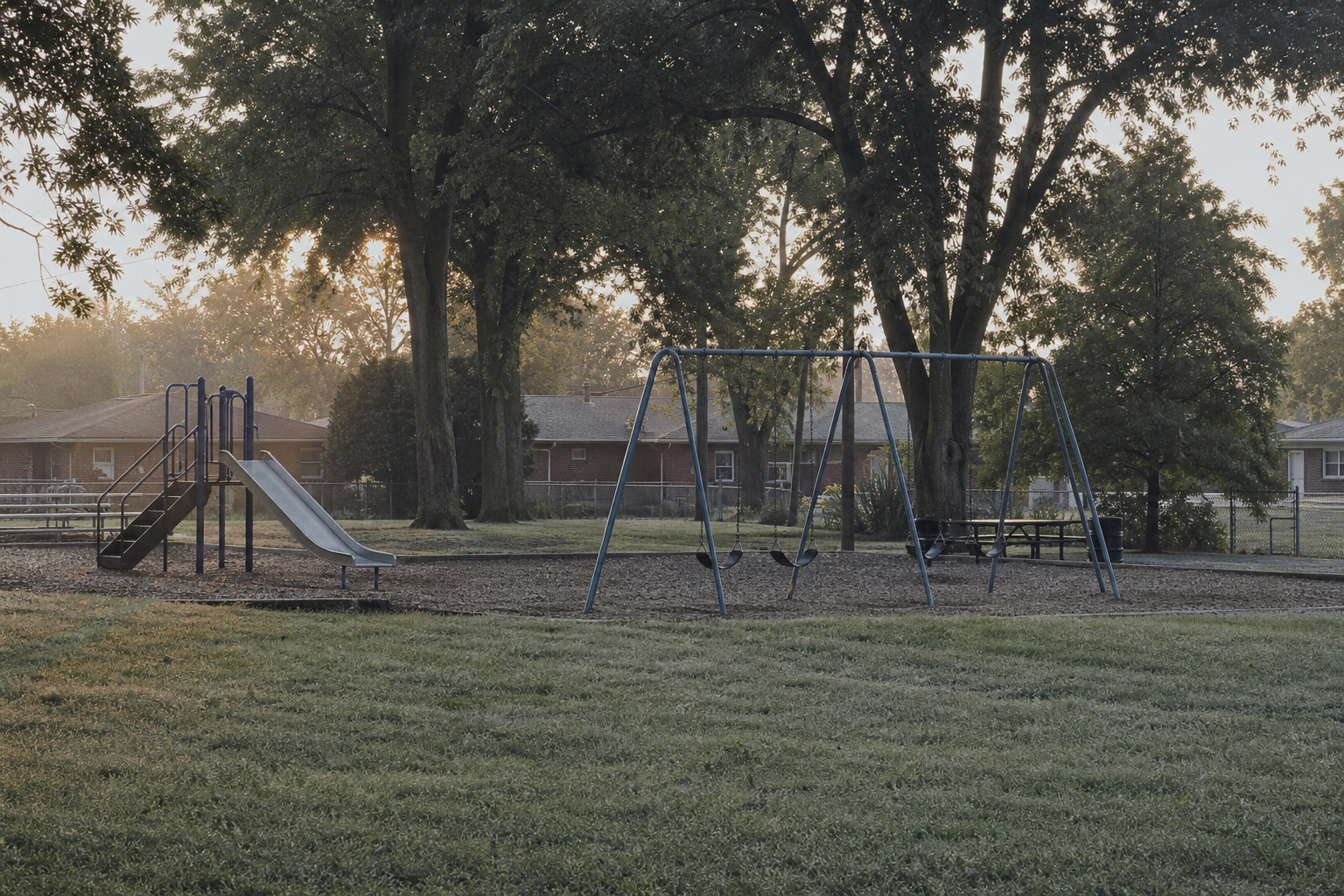

Suburban Cook County recorded 22,092 births in 2023, 5,766 fewer than in 2015 — a 20.7 percent drop — and its general fertility rate fell from 58.2 to 46.2 births per 1,000 women aged 15 to 44. Births fell in every year of that span but one, 2021, and the fertility rate fell in all four of the county health department’s suburban districts, most in the South District, from 60.6 to 43.8.
Public Health Birth Data: Birth and Fertility (msqb-nezd), curated by the Cook County Department of Public Health from Illinois Department of Public Health records, 2015 through 2023, retrieved September 18, 2026; last updated December 2, 2025 · the file covers Cook County excluding Chicago · counts and rates are the file’s; counts below 5 are masked by the file · no race or ethnicity breakdown is published here · no cause is assigned to any changeNine years of fewer births
| Year | Births | General fertility rate |
|---|---|---|
| 2015 | 27,858 | 58.2 |
| 2016 | 27,021 | 56.5 |
| 2017 | 26,407 | 55.2 |
| 2018 | 25,388 | 53.0 |
| 2019 | 24,625 | 51.4 |
| 2020 | 23,326 | 48.7 |
| 2021 | 23,803 | 49.8 |
| 2022 | 22,850 | 47.8 |
| 2023 | 22,092 | 46.2 |
The count fell in seven of the eight year-over-year steps. The exception was 2021, when births rose by 477 from 2020’s 23,326 to 23,803, before falling again to 22,850 in 2022 and 22,092 in 2023. The general fertility rate followed the same path, from 58.2 in 2015 to 48.7 in 2020, 49.8 in 2021 and 46.2 in 2023. The file records births and rates; it does not record why they changed, and this page does not guess.
Every district, and most towns
| District | Births, 2015 | Births, 2023 | Fertility rate, 2015 | Fertility rate, 2023 |
|---|---|---|---|---|
| North District | 9,882 | 8,314 | 57.4 | 48.3 |
| West District | 6,059 | 4,501 | 59.8 | 44.4 |
| Southwest District | 4,090 | 3,538 | 59.4 | 51.4 |
| South District | 5,233 | 3,784 | 60.6 | 43.8 |
The South District fell furthest: its fertility rate dropped 16.8 points, from 60.6 to 43.8, and its births fell 27.7 percent, from 5,233 to 3,784. The Southwest District fell least, 8.0 points, and ended 2023 with the highest rate of the four, 51.4. Of the 122 suburbs with unmasked birth counts in both 2015 and 2023, 104 recorded fewer births in 2023, 17 more and one the same.
The ten suburbs with the most births in 2023
| Suburb, as the file names it | Births, 2015 | Births, 2023 | Change |
|---|---|---|---|
| Schaumburg | 958 | 815 | −14.9% |
| Cicero | 1,255 | 799 | −36.3% |
| Arlington Heights | 901 | 756 | −16.1% |
| Palatine | 895 | 698 | −22.0% |
| Oak Lawn | 709 | 631 | −11.0% |
| Des Plaines | 678 | 571 | −15.8% |
| Evanston | 835 | 566 | −32.2% |
| Mount Prospect | 749 | 565 | −24.6% |
| Skokie | 685 | 553 | −19.3% |
| Berwyn | 768 | 528 | −31.3% |
Schaumburg led the suburbs in 2023 with 815 births, followed by Cicero with 799 and Arlington Heights with 756. Of those ten suburbs, all ten recorded fewer births in 2023 than in 2015.
What the file confirms, and what it cannot tell you
Confirmed, as published: births and rates by year and place, from state records the county health department curates. Not shown: Chicago, which the file excludes; why births fell; and anything about any birth or family. The file masks counts below 5, so three suburbs have no 2023 count, and its 126 municipal counts for 2023 sum to 22,082, ten fewer than its suburban total. The file warns that its pre-aggregated region rows overlap its municipal rows; this page reads totals only from the region rows and never adds the two together. Rates are the file’s own, and this page publishes no breakdown by race or ethnicity.
Where the record lives
The Birth and Fertility file sits on Cook County’s data portal, one of seven birth-data files the county health department publishes; births before 2015 are in a separate file. Every figure here was computed from it as retrieved on September 18, 2026.
The bottom line
Suburban Cook County recorded 20.7 percent fewer births in 2023 than in 2015, 22,092 against 27,858, and its fertility rate fell by nearly the same share. The decline reached every health district and 104 of 122 suburbs with counts in both years.
Three questions the file can answer
Which suburb recorded the most births in 2023? Schaumburg, 815. Which district had the highest fertility rate in 2023? The Southwest District, 51.4 births per 1,000 women aged 15 to 44. In which year did suburban births rise between 2015 and 2023? Only in 2021, by 477.
- Source: the Cook County Department of Public Health’s Public Health Birth Data: Birth and Fertility file (msqb-nezd), retrieved September 18, 2026.
- Rows read: all-race rows for all ages (births) and ages 15 to 44 (fertility), by year and place.
- Totals: from the file’s pre-aggregated “Suburban Cook County” and district rows, never by adding municipalities.
- Not here: no Chicago figures, no breakdown by race or ethnicity, no estimate for masked counts, and no cause for any change.
Computed by KCM Desk from the Cook County Department of Public Health’s Birth and Fertility file, retrieved September 18, 2026. Human-guided and edited — about this desk. If you spot an error, corrections come first.