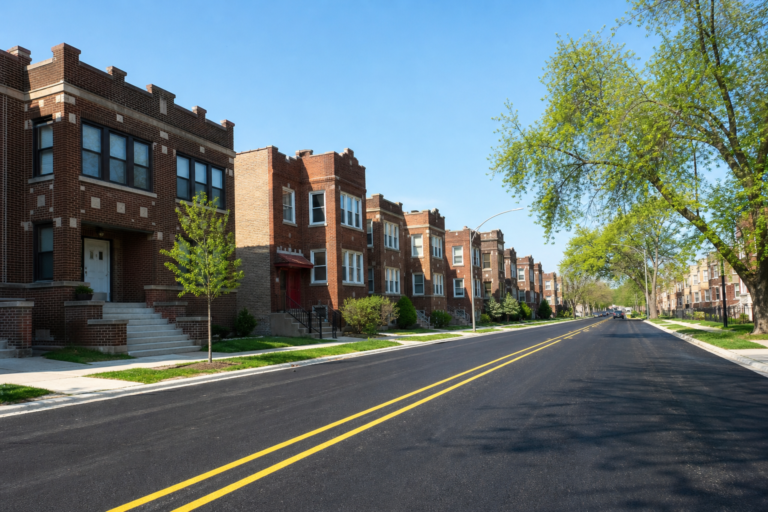
Chicago Measures Its Own Air Now: 286 Sensors, 2,544,089 Hourly Readings — and 96 Percent of Its 100-Plus PM2.5 Hours Landed on Two July Dates
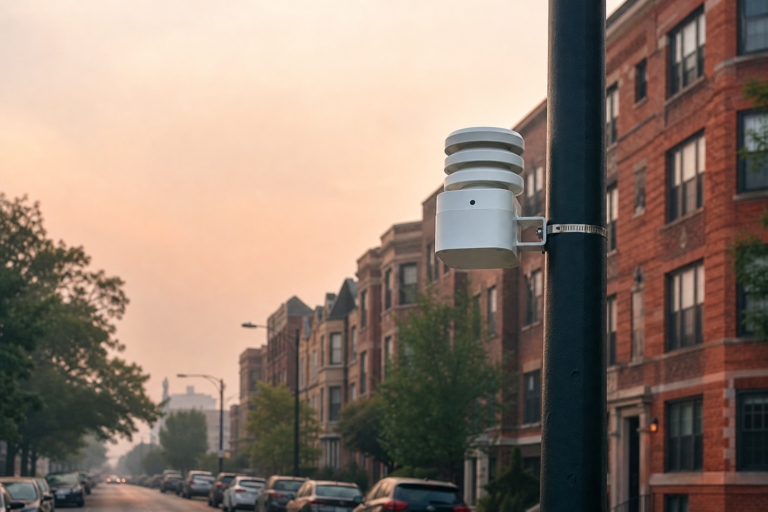
An air-quality sensor mounted on a light pole on a hazy Chicago street

Chicago runs its own air-sensor network now: 286 sensors carrying all 77 community-area names, 2,544,089 hourly readings since July 2025, read whole. The PM2.5 record book belongs to two UTC dates - July 16 and 17, 2026, with a 486.8 microgram hour and 96 percent of every 100-plus sensor-hour ever logged - beside an ordinary record where such hours are 0.45 percent of everything. Not for regulatory purposes, says the file itself, and this page keeps every caveat.

8 Chicago Height Records, by the Record: The City That Raised Its Streets, a Footprint File Where Two Stories Is King — and a Stories Column That Tops Out at 110

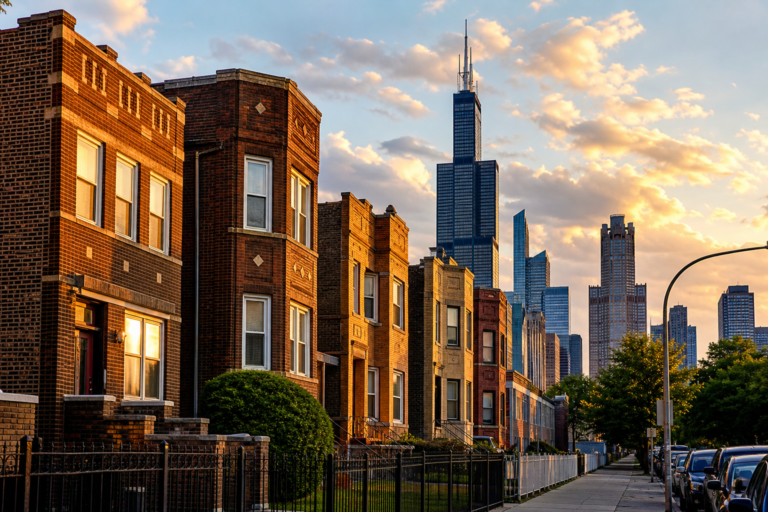
Brick two-flats in the foreground with the Chicago skyline rising behind

Chicago's height story, with receipts: the streets themselves were raised four to five feet on average in the 1850s, a building among the world's first skyscrapers went up - and came down - at LaSalle and Adams, the Willis Tower held the world title for nearly 25 years, and the city's own footprint file crowns a different king: two stories, 198,439 times. Eight vertical records, every one traceable.

Does Chicago’s Alt-Fuel File Mean a Plug Is Always Near? 350 Public Electric Stations, Just 291 Fast Ports — and the Columns That Decide

An electric car plugged into a public charging station on a Chicago street at dusk

Chicago's alternative-fuel file lists 398 stations, and the short answer is direct: 350 public electric stations marked Available, 283 of them posted 24 hours. The longer answer lives in the columns - 1,043 Level 2 ports against just 291 fast ports, 26 network labels, four ZIP codes holding 38 percent of everything, and a last-confirmed date on nearly every row. A decision-guide read of the whole file.

Before a Shovel Touches Chicago Ground, the Notices Fly: 18,091,229 Utility Notifications Since 2018 — and the City Is the Second-Most-Notified Name on Its Own 811 List

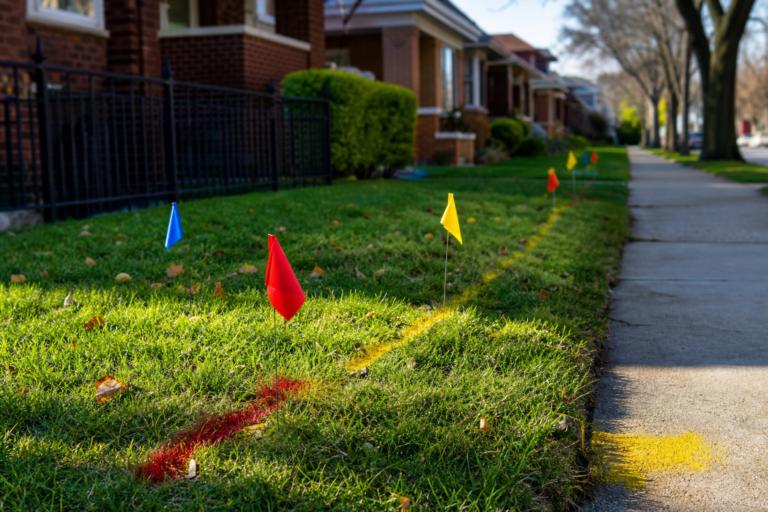
Colored utility marking flags on a Chicago parkway strip beside a sidewalk

Planning a fence post or a tree? Chicago's 811 file is the paper shadow of every dig: 18,091,229 utility notifications since 2018, read at honest grain - 191,071 distinct dig tickets in the biggest year, about a dozen notices per ticket, Peoples Gas first and the City of Chicago itself second among 75 notified names, 223,074 no-show notices, and emergencies just 2.8 percent of the file.

What Car Will Your Ride Be? Chicago’s Rideshare Register Lists 97,695 Vehicles for June 2026 — One in Three a Toyota, and Black Beats Silver by 168 Cars

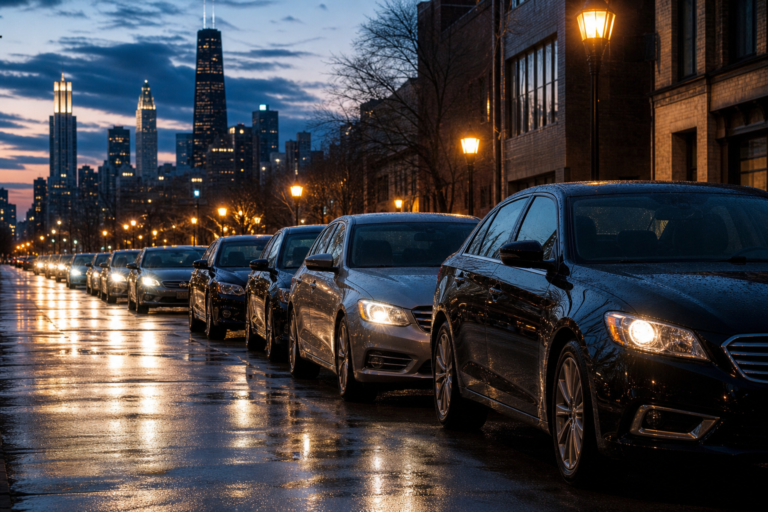
A line of black and silver sedans parked along a Chicago street at dusk

You tap the app - what car will it be? Chicago's rideshare vehicle register answers: 97,695 vehicles reported for June 2026, one in three a Toyota, the seven most common models all Toyotas, and Black edging Silver by 168 cars. The register runs from model year 2009 to 2027, a third of the fleet reported zero trips, one in five cars is on more than one app - and the companies reported 11,500 more vehicles than drivers.

Chicago Has 1,937 Legislated Parking Zones. The Median One Is Two Block-Sides Long — and 1,382 Segments Hold Zone Rights With No Signs for Their Zone

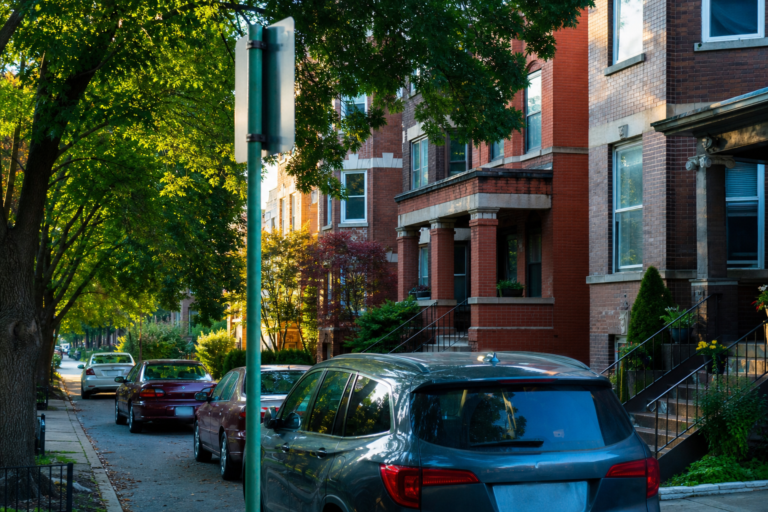
A Chicago side street lined with parked cars and a parking sign pole

Why does your block need a permit while the next street over doesn't? Chicago's residential permit parking is assembled from 1,937 active zones created by City Council legislation - and the file runs small: the median zone is two block-sides, 238 zones are a single segment, zone 383 sprawls to 653. One in seven active segments is an unsigned buffer where permit rights exist without that zone's signs, 17 percent of zone-street pairs cover one side only, and 503 segments sit rescinded. Prices and rules live with the City Clerk.

Chicago’s Small Business Improvement Fund Has Paid $158 Million Across 2,260 Projects (Median Project Share: 60 Percent) — and Its Jobs Columns Say Aspirational

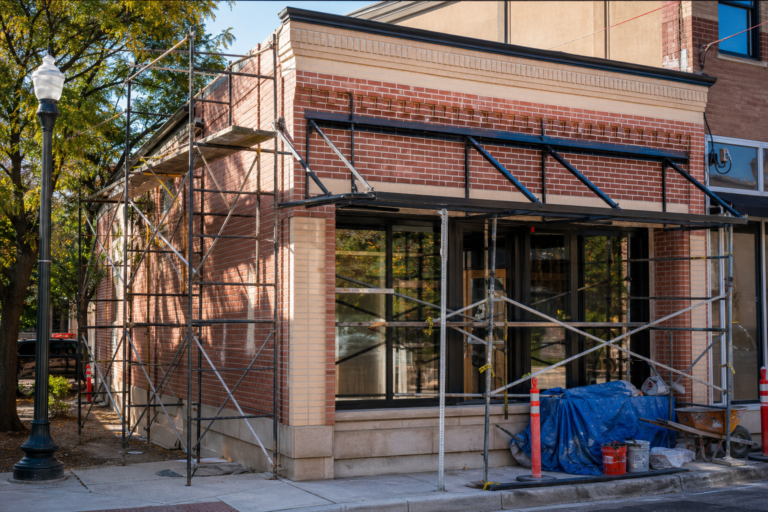
A small Chicago brick storefront mid-renovation with scaffolding

The Small Business Improvement Fund fixes up commercial and industrial buildings with TIF money. Its completed-project file, read whole: $158,290,850 in grants against $311,428,135 in project costs since 2001 - 50.8 percent summed, a 60.1 percent median project share - across 2,260 projects in 70 community areas and 121 TIF districts; median grant $55,331; busiest year 2012, biggest dollar year 2025. The file's own jobs columns are labeled aspirational, and this page keeps that word. No applicant or project name is printed.

The Register Behind the Weird Lines on Your Chicago Receipt: 41,940 Tax Registrations, 35 Labels — and Two Labels With One Registrant Each

A long paper receipt curling on a counter beside a cash register

Who collects the Checkout Bag Tax line, the Bottled Water Tax, the amusement tax on a streaming bill? The Department of Finance's register holds 41,940 registrations across 35 tax-type labels: Ground Transportation leads at 10,299, the amusement family runs five distinct labels including one for social media, 6,947 registrations list out-of-state addresses, and two labels carry exactly one registrant. No name from the file is printed - its entity types include individuals - and no rate appears; the city's tax list is linked for current terms.

Chicago Keeps a Do-Not-Dig List: 14,093 Active Street Moratoriums, Doubled Permit Fees After Repaving — and One Stretch Protected Until 2207

A freshly repaved Chicago residential street with new yellow lines

When Chicago repaves or rebuilds a street, CDOT logs it on a moratorium list: 36,508 street-segment rows since 1998, 14,093 active - with doubled permit fees for the moratorium's life, ten years after reconstruction and five after repaving, in the portal's own words. Inside: 993 streets on the active list, a 2023 record year, exactly three rows labeled No Digging, a Madison Street row with no expiration, and a Churchill Street moratorium running to the year 2207, printed as filed.

Between Proposal and Ordinance, Chicago’s 2026 Position Book Moved by 51 — and 46 of the 51 Went to the Library

A grand public library reading room with green lamps and arched windows

The city publishes its 2026 position book twice - the mayor's proposal and the adopted ordinance. Read line by line, the whole difference fits one table: 27,975 annual positions adopted vs 27,924 proposed, the annual changes across eight departments summing to exactly +51 - 46 of them at the Chicago Public Library, which also gained 52,497 budgeted hours. Police unchanged at 13,727; the salary ladder unmoved; dollars up $8,622,575, or 0.22 percent.

Moving HereLiving HereCity in MotionNeighborhoods & Suburbs
About · Editorial Policy · Our Data & Methods · Privacy · Terms · Contact
© 2026 Keep Chicagoland Moving · A TAK Marketing, LLC publication · Part of the fabulous Omnishun information systems