
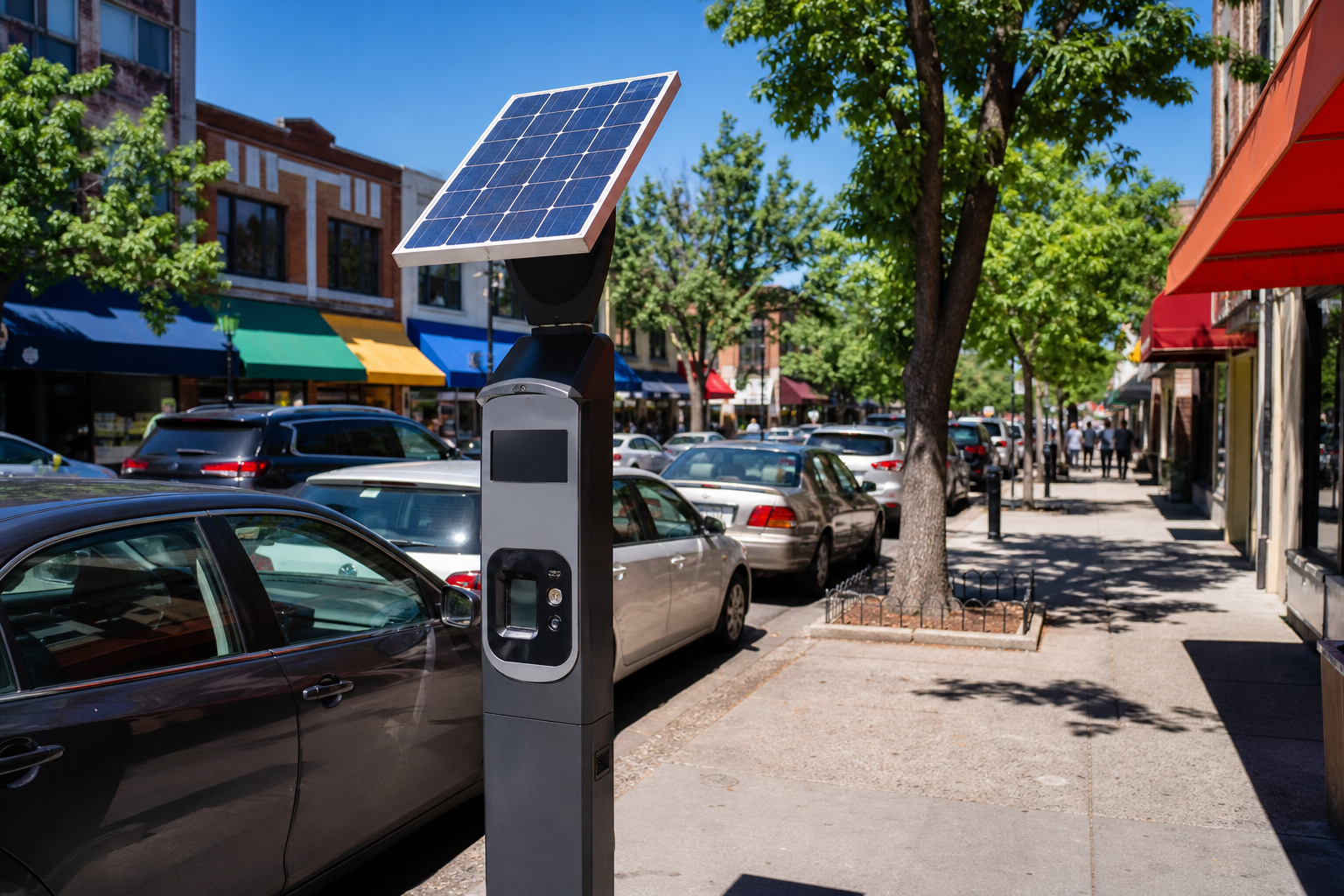

On September 29, 2026, the Chicago City Council voted 46 to 3 to approve, on conditions, the proposed sale of the company that holds the city’s parking-meter concession. The same ordinance authorizes the city to sign a third amendment to the lease. Under that amendment the city is to receive $75 million in cash, five percent of the company’s net income each year, as the amendment defines that figure, and two percent of what its owners are paid in a later transfer that needs the city’s approval, all of it directed to the pension funds. The lease itself was signed in 2008: a 75-year term that began February 13, 2009, for an up-front price the agreement sets at $1,156,500,000 and the operator’s audited books record as $1,151,355,186. Under it the city paid the meters’ operator $160,953,305 in audited “true-up” payments from 2009 through fiscal 2024 for closing or changing metered spaces. Dollar figures on this page come from named public documents, with two kinds of exception, each labeled where it appears: two figures a news outlet reported, and this page’s own arithmetic. Every document this page draws on is linked, and the arithmetic is explained where it appears or in the method notes at the end.
City Clerk record SO2026-0025407, the substitute ordinance and its Third Amendment (read September 30, 2026) · COFA true-up report, CPM audited financial statements and the Amended and Restated Concession Agreement (read August 17, 2026)The terms, from the primary documents
The Amended and Restated Concession Agreement states the basic terms in Section 2.1: the operator pays the city “the exact amount of $1,156,500,000 in cash,” and receives the concession for a term expiring at 11:59 p.m. on February 29, 2084. The operator’s own audited statements describe the same deal from the company’s side: Chicago Parking Meters, LLC (CPM) leased the metered-parking system for a 75-year term beginning February 13, 2009, and recorded a purchase price of $1,151,355,186. That is $5,144,814 less than the agreement’s figure, and the documents read for this page do not explain the difference. Of the recorded price, $1,146,255,186 is booked as the concession rights, which the company amortizes, meaning it expenses them in equal parts, at $15,283,402 a year for 75 years. Counted to the February 29, 2084 expiration, more than seventeen and a half years have passed since the start and more than 57 remain; the last full calendar year is 2083. The system covers roughly 36,000 metered spaces, per the Council Office of Financial Analysis (COFA). At the end of 2025 the company’s owners were Morgan Stanley-affiliated infrastructure partnerships (50.100 percent) and Deeside Investments (49.900 percent), as the audit records them.
Correction, September 30, 2026: when this page was published on August 18, 2026, it gave the up-front price as exactly $1,151,355,186. That is the purchase price in the operator’s audited statements. The agreement itself sets the payment at $1,156,500,000, a figure the first version left out. Both now appear above, each with its document. The first version also took the February 29, 2084 date from a formula elsewhere in the agreement; Section 2.1 states it directly as the end of the term.
The true-up ledger: what the city has paid the operator
- 2009$533,290
- 2010$1,658,036
- 2011$14,134,842
- 2012$26,738,664
- 2013$14,617,084
- 2014$6,481,150
- 2015$8,637,891
- 2016$15,740,662
- 2017$21,736,219
- 2018$17,371,527
- 2019$11,037,684
- 2020$6,250,836
- 2021$6,722,885
- 2022(unused settlement credits applied)$0
- 2023$1,702,107
- 2024$7,590,428
When the city temporarily closes metered spaces, or uses its reserved powers over rates, hours, and meter counts, the concession agreement requires it to reimburse the operator for the lost revenue. The closures COFA gives as examples are events, construction, and weather parking bans. COFA compiled the audited payments above from CPM’s financial statements: $160,953,305 from the deal’s 2009 start through fiscal 2024, peaking at $26.7 million in 2012, with 2022’s zero reflecting unused settlement credits. COFA’s report also records that a 2013 renegotiation of the reimbursement formula saves what it estimates at $25 million a year, and that the 2025 resolution of CPM’s COVID-era claims totaled $25.2 million: a $15.5 million settlement payment plus a reported $9.7 million to resolve the legal claim. The operator’s own 2025 audit, a separate document, recognizes $11,817,498 of true-up revenue for 2025, a year COFA’s paid-through-2024 table does not yet cover; the two documents agree on 2024 to the dollar.
The operator’s audited results for 2025
The audited statements the operator must file with the city each spring report parking revenues of $188,698,712 for calendar 2025, against $160,945,228 in 2024. By the audit’s own notes the 2025 figure includes the $15.5 million city settlement and the $11.8 million of true-up revenue. Net income was $72,770,043, and the company distributed $71,336,940 to its owners during the year, against $17.1 million the year before. It carried $1,068,376,607 of principal on its notes at year-end and paid $61.0 million in interest during 2025. In September of that year it issued $360 million of new notes, using the proceeds to repay maturing debt, pay transaction costs, and fund a distribution to its owners, as the debt note states.
The sale: agreed December 30, 2025, approved September 29, 2026
In these documents the sale first appears as one sentence in the operator’s 2025 audit: on December 30, 2025, the Morgan Stanley-affiliated partnerships agreed to sell their interests to an unrelated third party that would also purchase Deeside, which makes it a sale of the whole company. The audit called this a change in control that “requires approval by the Chicago City Council, which has not yet occurred.”
The City Clerk’s record of ordinance SO2026-0025407 shows what followed. The company asked the city for approval in a letter dated March 12, 2026. The mayor introduced the ordinance on May 20. The Committee on Finance took up a substitute on September 22 and advanced it to the full Council, which deferred it on September 25 and passed it on September 29 by 46 votes to 3, with one member not voting. The mayor signed it the same day. The buyer named in the ordinance is a group of affiliates of Stonepeak Partners LP, which after the transfer would own 100 percent of the company, directly or indirectly.
What the city is to receive: three payments, all directed to pensions
What does the city get for its approval? Three payments, each written into the substitute ordinance and the Third Amendment attached to it. The ordinance directs all three to the city’s pension contributions, with the split among the funds left to a later Council decision.
- Transfer fee$75,000,000, due on or about the date the amendment is signed. The ordinance calls it Community Benefits Funds.$75M
- Yearly profit shareOf the prior year’s net income, as the amendment defines it. Due within 150 days after each calendar year ends.5%
- Fee on later transfersOf what the owners are paid in a later transfer that needs and obtains the city’s approval. Due at that closing, or afterward at a time the city sets.2%
Five percent of what? Of net income, which is what remains after the company’s expenses, interest on its debt and the yearly amortization of the lease price among them. That is a smaller base than revenue: for 2025 the audit shows $188,698,712 of parking revenue and $72,770,043 of net income. Section 3.22 of the amendment defines the base as the company’s “net income as shown on their audited financial statements” for the prior year, with one adjustment: management fees paid to companies the buyer controls are added back to the extent they are not at arm’s length and exceed the prior year’s fees adjusted for inflation. The section names no adjustment for interest. Our reading, limited to that section: interest the company records as an expense on those statements lowers the figure the five percent is taken from.
How large is five percent? The ordinance states a percentage and no total. For scale only: the company’s audited net income was $34,615,024 for 2024 and $72,770,043 for 2025, and five percent of those is about $1.7 million and $3.6 million. The 2025 revenue included a one-time $15.5 million settlement from the city, and the amendment’s definition of net income is not identical to the audit’s, so this is arithmetic on two past years and not a forecast. Block Club Chicago reported that the city is expected to receive about $375 million over the next 57 years, a total that appears in neither document. Divided evenly over 57 years it comes to about $5.3 million a year if the $75 million is counted inside it and about $6.6 million if it is not. Either is more than five percent of the net income of 2024 or 2025; the documents do not show how the total was estimated.
The conditions, and the other changes to the lease
The approval is conditional. Under the ordinance it is revoked if, by the end of 2026 or ten days after the sale closes, whichever comes first, the city has not received the $75 million and the company and the buyer have not signed and delivered the amendment and two certificates reaffirming the disclosure statements they filed with the city.
The amendment also changes the lease in ways that involve no payment to the city. For seven named annual events, among them the Bud Billiken Parade, the Pride Parade and Riot Fest, the length of a closure that counts as a full day rises from six hours to ten; closures of six to ten hours at those events are still tallied, and if the year’s allowance is exceeded the city pays for them only out of settlement credits and meter money otherwise due to the city. The company may not disclose personal data from the meter system to anyone else, law enforcement and other government agencies included, except to the city, to its own contractors and advisers, for legal claims, or as the law or a court order requires. It must notify the city of any demand for that data unless the notice itself would break the law. The ordinance describes the purpose as keeping meter data from federal immigration enforcement authorities except as the law requires or the agreement permits. When the company is next put up for sale, the city has 30 days to submit an offer of its own, the chief financial officer has 30 days to make a recommendation, and the Council has 90 days after that to vote.
Other sections set up studies and reports without fixing a result. The city and the company are to form a working group on on-street electric-vehicle charging at metered spaces, with quarterly benchmarks and with the split of costs and revenue left to negotiation. They are to explore other uses of the meters, among them services from the city’s Smart Streets and Smart Loading Zone pilot programs and having the meters issue city vehicle stickers. The amendment adds employee-protection standards covering the company’s employees and its operator’s employees, and the company’s reports on hiring city residents must state what share of them live in areas the city classifies as socio-economically disadvantaged. The ordinance orders a yearly city audit of how the company handles convenience-fee revenue. The company must also give the Finance Committee’s chair and the chief financial officer status updates, on request and in confidence, about a divestiture described in a certificate from the buyer. That certificate is not among the nine files attached to the Clerk’s record. Block Club Chicago reported that the buyer agreed to sell an airline that has flown deportation flights for the Department of Homeland Security.
Two things these documents do not state: the price the buyer is paying and the date the sale closes. Block Club Chicago reported the price as about $2.5 billion. The ordinance’s own deadline is for its conditions: the $75 million and the signed documents must be in hand by the end of 2026 at the latest.
Known limits
This page reports what the documents record and takes no position on the deal’s wisdom; where a characterization appears, it is a named document’s own. COFA’s report describes the 2009 Inspector General estimate that the city received nearly $1 billion less than the system’s projected value, and describes a 2024 audit showing CPM had “generated $1.97 billion in income, surpassing its initial investment in less than 10 years.” Both are reported here as COFA’s statements. Figures from different documents are never summed: the true-up table is COFA’s compilation of audited payments through 2024, and the 2025 figures are the operator’s audited results, kept apart. Meter counts, rates, and revenue projections beyond these documents are not reprinted here, with one exception that is attributed where it appears: a news report’s 57-year total. The 2026 amendment was read in the form the Council approved, with its dates left blank; the signed version may fill them in.
- Sources Council Office of Financial Analysis, Aldermanic Request: Parking Meters — “True Up” Payments (2025), the source of the 2009–2024 audited-payments table; Chicago Parking Meters, LLC audited financial statements for 2025 and 2024 (filed with the city April 27, 2026 under Section 8.1(c) of the concession agreement); and the Amended and Restated Chicago Metered Parking System Concession Agreement (June 5, 2013, with amendments), all posted by the city and retrieved on August 17, 2026. The COFA report and the audited statements were read in full. The agreement file runs 210 pages; it was read for the provisions cited on this page, and its Section 2.1 was read again on September 30, 2026. The city’s asset-lease agreements page hosts the annual filings. For the 2026 sale: the City Clerk’s record of ordinance SO2026-0025407 (action history and roll call), the substitute ordinance and its Exhibit A, the Third Amendment, each read in full on September 30, 2026. The sale price, the 57-year total and the description of the business being divested come from Block Club Chicago’s report of September 29, 2026 and are attributed to it where they appear.
- Counting The true-up table is reprinted exactly as COFA publishes it, and its total is recomputed here. Term arithmetic (years elapsed and remaining) is ours, measured from the audit’s February 13, 2009 start date to the February 29, 2084 expiration in Section 2.1 of the agreement, as of September 30, 2026. Dollar figures are quoted from the documents without adjustment, and figures from different documents are never added together. The other calculations that are ours are stated where they appear: the difference between the agreement’s price and the audited purchase price, five percent of the audited net income of 2024 and of 2025, and the reported 57-year total divided by 57 with and without the $75 million.
Compiled by KCM Desk from the city’s posted documents, retrieved August 17, 2026; updated September 30, 2026 with the City Council’s approval of the sale. Human-guided and edited — about this desk. If you spot an error, corrections come first.
Related Keep Chicagoland Moving coverage
- How Chicago Works, by the Numbers
- Chicago Has 1,937 Legislated Parking Zones. The Median One Is Two Block-Sides Long — and 1,382 Segments Hold Zone Rights With No Signs for Their Zone
- Chicago’s Skyway Lease, From the Documents: $1.83 Billion Up Front in 2005, Two of Three Reserve Funds Drawn Near Zero by 2016, and $1.44 Billion Still Being Counted Through 2103
- Chicago’s Pensions, as the Documents State Them: $14.2 Billion Held Against $50.6 Billion of Pension Liability at the End of 2025, 28 Percent Funded — and No Fund Projected to Pass 50 Percent Before 2043 on the Schedule State Law Sets
- Chicago’s Transportation-Permit File Holds 1.8 Million Applications. More Than Half Are Marked Open.
- In 90 Days, Chicago Recorded 5,396 Vehicle Tows — and 4,259 Relocations